

All-women team leads research cruise to Antarctica
By: Tricia Thibodeau
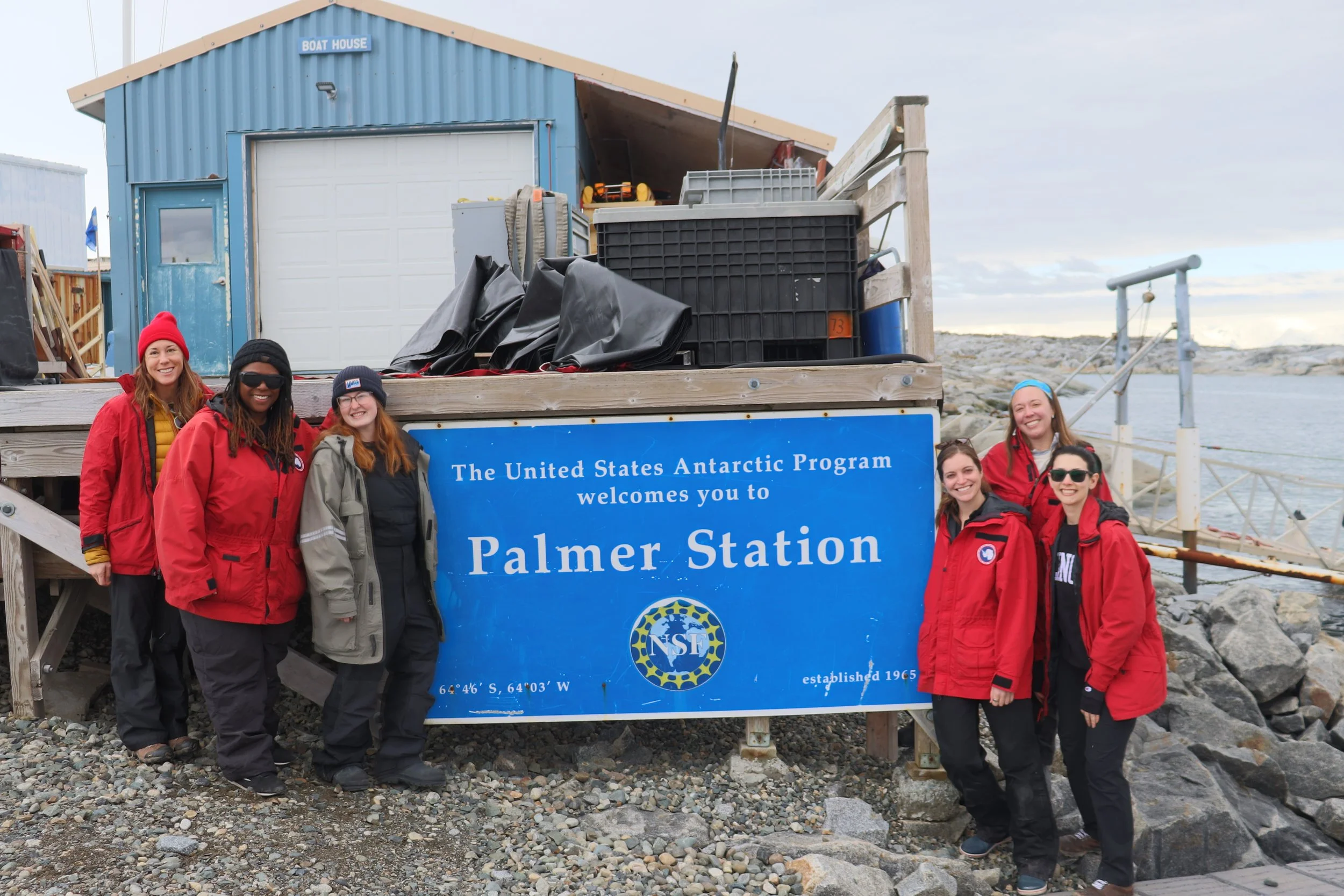
Image: LIMBOW team at Palmer Station. From left to right: Maggi Mars-Brisbin, Kyra Sims, Hailey Thomas, Ellen Buckley, Tricia Thibodeau, and Rose Malanga.
Over the course of 5-weeks, an all-women research team participated in an oceanographic research cruise to Antarctica. The project, funded by the National Science Foundation (NSF), aimed to integrate physical oceanographic data with concurrent biogeochemical and ecological observations to advance our understanding of climate-driven changes in the Weddell Sea. Named project LIMBOW (Linking Ice Melt to Biogeochemistry and Organisms in the Weddell), its specific objectives were to quantify 1) physical characteristics of summer sea ice, 2) sea-ice driven gradients in biological community composition and, 3) chemical composition of sea-ice meltwater and its impact on productivity and carbon export.
To accomplish its objectives, the team consisted of Co-Chief Scientist, Dr. Maggi Mars-Brisbin, of the University of South Florida, a biological oceanographer who aims to unravel and interpret interactions between marine microbes and their environments; Dr. Ellen Buckley, a sea ice scientist from the University of Illinois who works to understand changes in sea ice using remote sensing and in situ measurements; Rose Malanga, a graduate student with Dr. Buckley studying the physical and chemical characteristics of sea ice; Dr. Tricia Thibodeau of the University of New England, a biological oceanographer and former SWMS President, interested in quantifying the impacts of melting sea ice on zooplankton community production along with her graduate student Hailey Thomas; and Kyra Sims, a professional French hornist embarking on an adventure to play her horn on all 7 continents, joining the team as part of the NSF funded Polar STEAM (Science, Technology, Engineering, Arts, and Math) program. Dr. Meredith Meyer, a biogeochemist at the University of East Anglia and Emma Robertson, a graduate student at the Alfred Wegener Institute, also served as senior personnel on the NSF proposal and assisted in project development but did not sail on the cruise. This all-women-identifying team represented early career researchers, many of whom were embarking on their first research cruise to Antarctica, and they were ready for the challenge!
This project represented a unique opportunity in more ways than one. Drs. Mars-Brisbin, Buckley, Thibodeau, Meyer, and Emma Robertson were originally teamed together as part of an NSF funded chief scientist training program planned on the USCGC Healy in Summer 2024, whose field component to the Arctic was abruptly cancelled due to ship mechanical issues. The team was then approached by the NSF Office of Polar Programs in spring 2025 to submit a RAPID proposal to participate in an Antarctic research cruise on the R/V Palmer from February-March 2026 alongside an already funded geology proposal from Tom Tobin of the University of Alabama. The RAPID proposal was successfully funded only for the team to discover the NSF contract with the R/V Palmer had been canceled, leaving the team without an Antarctic research vessel. Fortunately, NSF was able to enlist the UNOLS vessel, R/V Sikuliaq, to sail from Alaska to support the LIMBOW cruise from January-February, 2026.
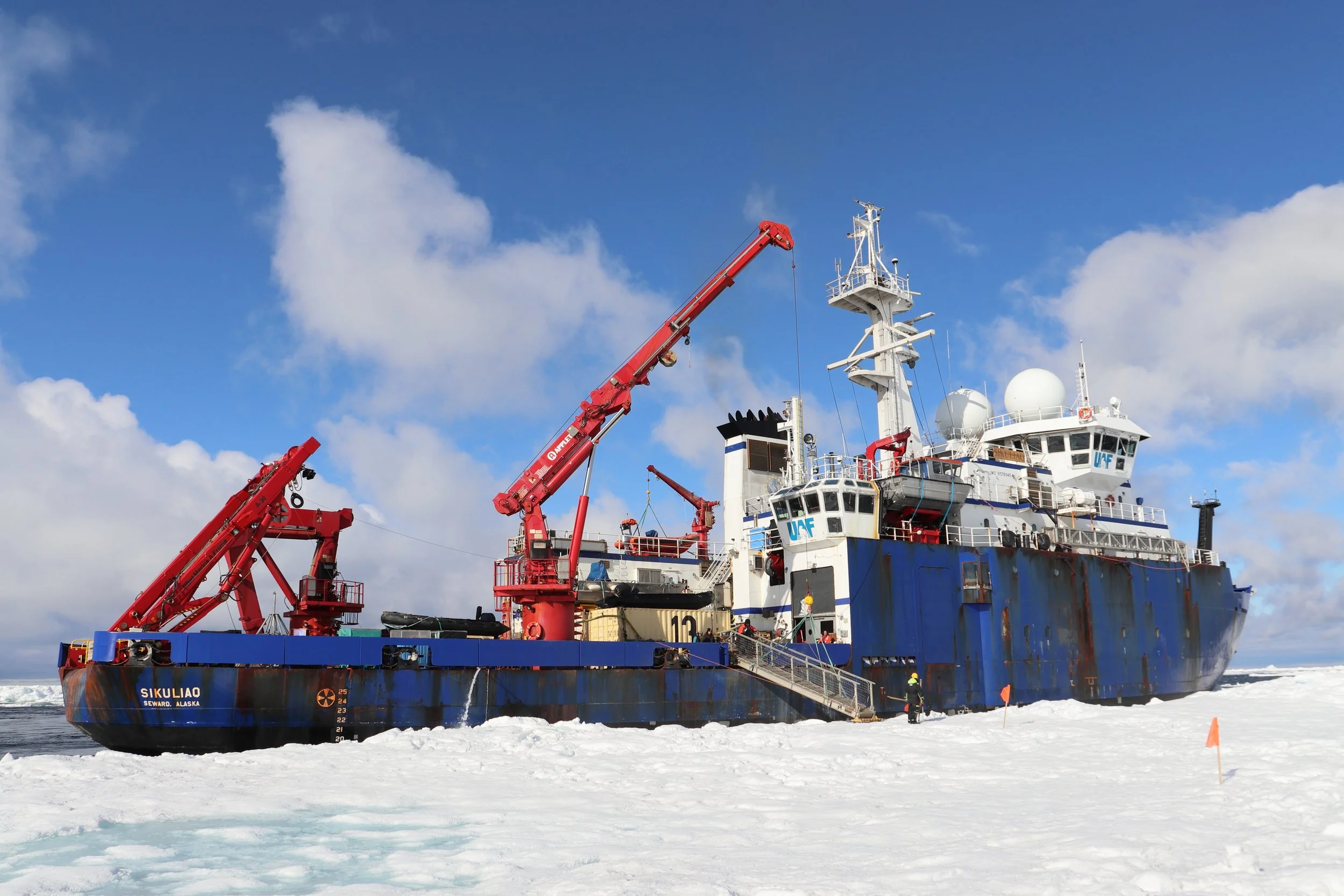
Image: Side of Sikuliaq
Despite lost cargo and a government shutdown in fall 2026, the team was able to successfully mobilize in Punta Arenas, Chile and set sail January 11, 2026. After a surprisingly calm Drake Passage crossing, the R/V Sikuliaq began its transit towards Seymour Island in the Weddell Sea to deploy the geology team. Unfortunately, sea ice conditions were heavier than expected, which led the ship to be temporarily ‘stuck’ in the sea ice (or ‘Shackletoned’) for five days before wind and current conditions pushed the sea ice eastward, enabling the ship to break free. The ship was able to successfully arrive at Seymour Island a few days later, enabling the geologists to collect their fossils and sediments to better understand the dinosaur extinction from the cretaceous period. Despite conditions on the island being muddier than expected, the scientists worked collaboratively so that the geology team utilized small boats from the ship during the day and the LIMBOW team used the ship in the evening to conduct its research.
A typical LIMBOW station consisted of an ice station, a conductivity, temperature, depth (CTD) rosette cast, two zooplankton net tows, and, occasionally, a benthic grab. Sea ice stations consisted of a traditional snow pit analysis. Snow depth, stratigraphic layers, and the physical properties of each layer were documented, including hardness, grain shape, grain size, density, and temperature. Following completion of the snow pit, a temperature core and salinity core were collected from the sea ice and then sectioned into 0.05m increments to be melted and stored for nutrients and d18O measurements. CTD water was sampled at 6 different depths, and water was filtered for chlorophyll-a, HPLC, and RNA/DNA. Each depth was also sampled for bacterial counts. In addition, primary production measurements were taken at four stations as well as two, 3-day incubation experiments to test the impact of sea ice meltwater on phytoplankton and bacterial growth, primary production, gene expression and community composition. For the zooplankton net tows, a 700 µm mesh 2-m Metro Square frame was deployed to collect macrozooplankton (e.g., Antarctic krill, gelatinous salps and pteropods) and a 333 µm mesh 1m Tucker Trawl net was used to collect mesozooplankton (e.g., copepods). Over the course of the cruise, 8 ice stations, 22 CTDs, 44 zooplankton tows, 9 Van Veen grabs, 5 Multi-cores, and 4 Hydrophone casts were conducted.
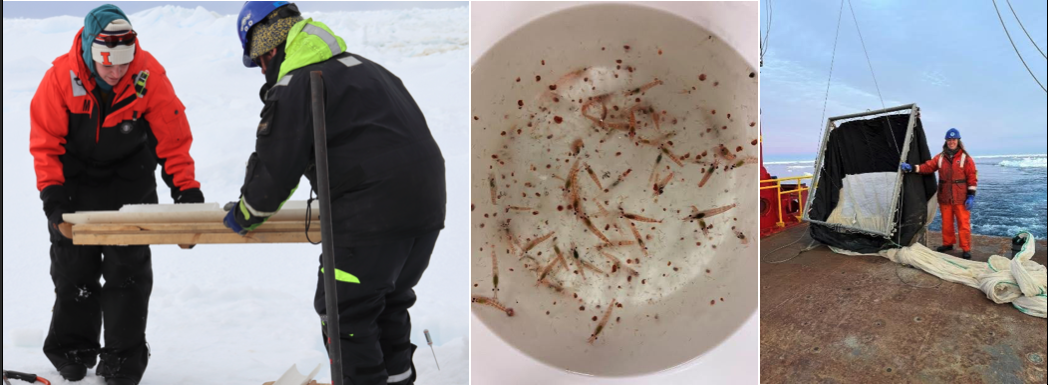
From left to right: Two team members handling ice core in field; Representative composition of a macrozooplankton net tow including primarily Antarctic krill (Euphausia superba) and salps (Salpa thompsoni); Tricia Thibodeau next to the 2m net.
One of the more unique and memorable aspects of the cruise was the participation of professional French Hornist, Kyra Sims, on the cruise. Kyra was supported through Polar STEAM,, which is an NSF-funded program that integrates educators and artists with scientists conducting research in the polar regions. As a participant on the research cruise, Kyra collected various recordings of the ice, water, and wildlife, to be used in future art projects. Equipment included a RØDE NTG5 shotgun mic with a Movo blimp for wind blocking, Zoom handheld recorders, and an Aquarian hydrophone. The hydrophone was deployed four times: one deployment occurred off the starboard side of the ship, and the other three deployments were administered at sea ice sampling stations, either off the side of the zodiac, which was used to get to each ice station, or inside of drill holes in the sea ice created by the science team. She also collected digitized recordings of self-monitoring hydrophones positioned through the ship’s hull, which picked up sonar pings, engine thrust, and other onboard-generated noise. Kyra’s participation makes her the first black classical musician in Antarctica and the team is excited to hear her final compositions as part of a performance in New York City.
The end of the cruise was marked by a trip to Palmer Station, in which the LIMBOW team was able to hike up to the top of the nearby glacier, and then a rougher crossing through the Drake Passage with a successful arrival back in Punta Arenas on February 14. Despite a lot of changing plans before and during the cruise, the LIMBOW team was able to successfully accomplish their research objectives and are looking forward to a workshop in August at the University of New England in Maine to synthesize the results later this year!
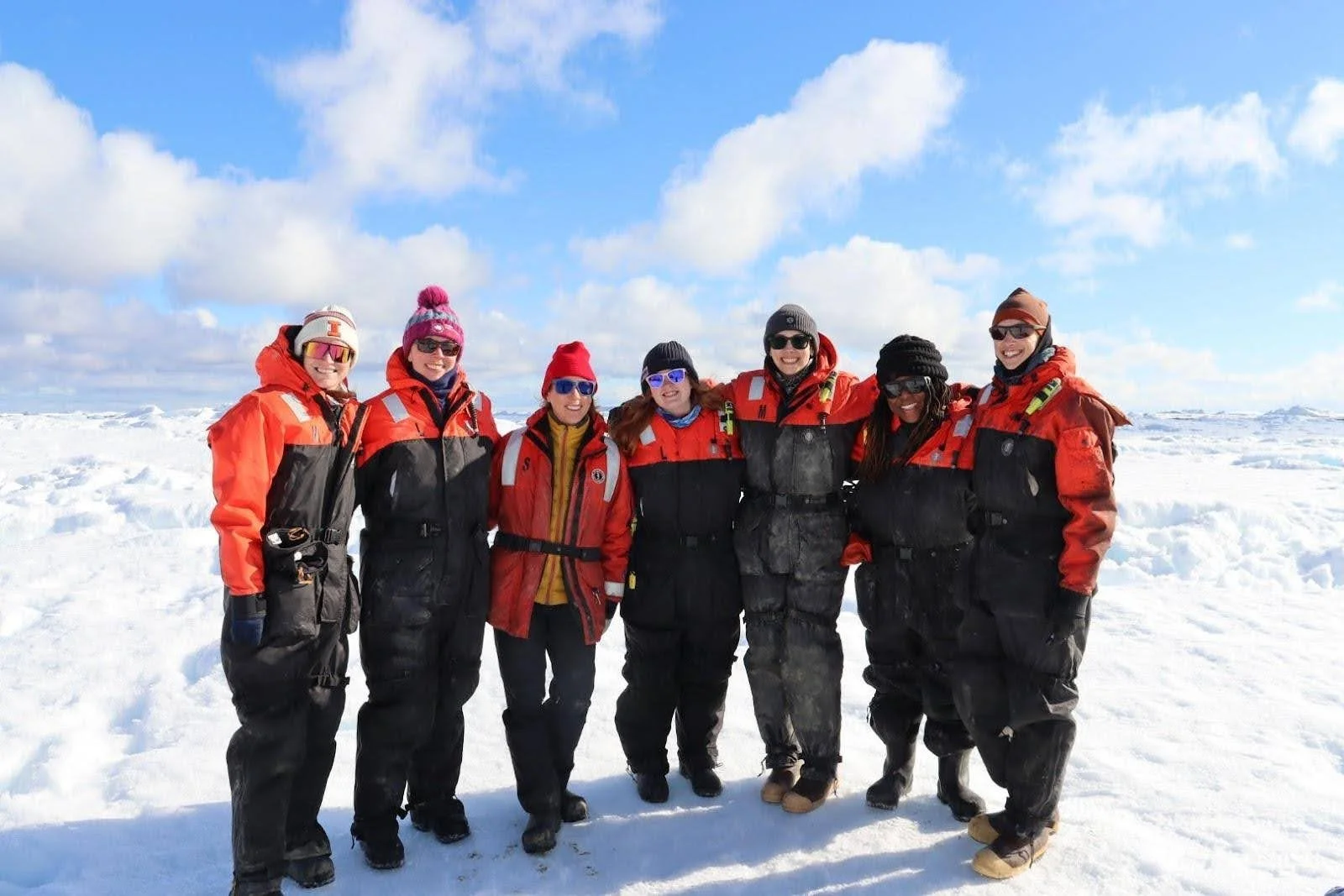
Image: LIMBOW cruise team photo on ice station F. From left to right: Ellen Buckley, Tricia Thibodeau, Maggi Mars-Brisbin, Hailey Thomas, Rose Malanga, Kyra Sims, and Emily Fedders, and ice analyst from University of Alaska-Fairbanks.
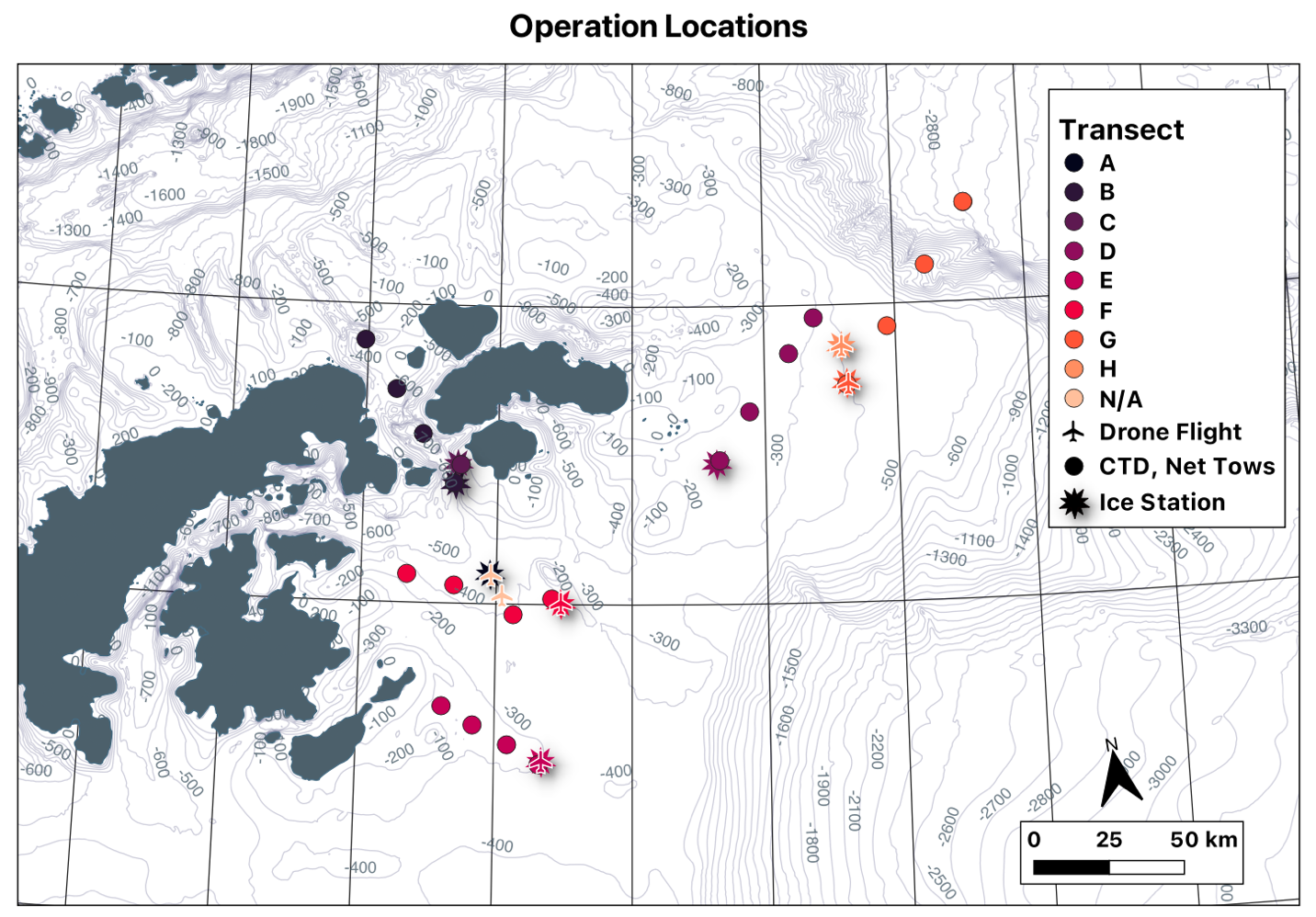
Image: Station/Transect Map.
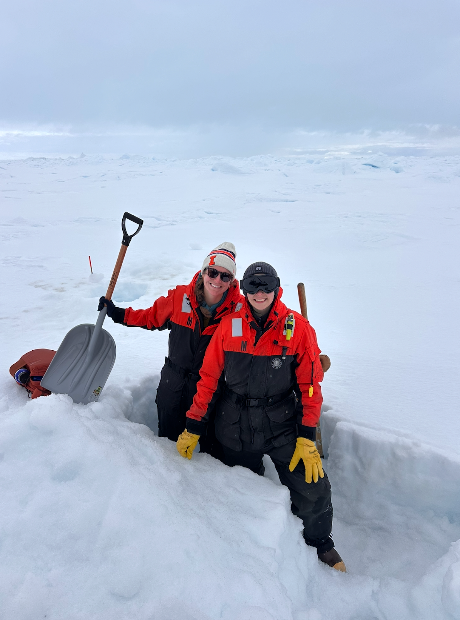
Image: Photos from an ice station. From left to right: Ellen and Rose in the 78 cm snow pit.
