

By Katie Shore, Founder & Co-President, UCI Chapter of SWMS
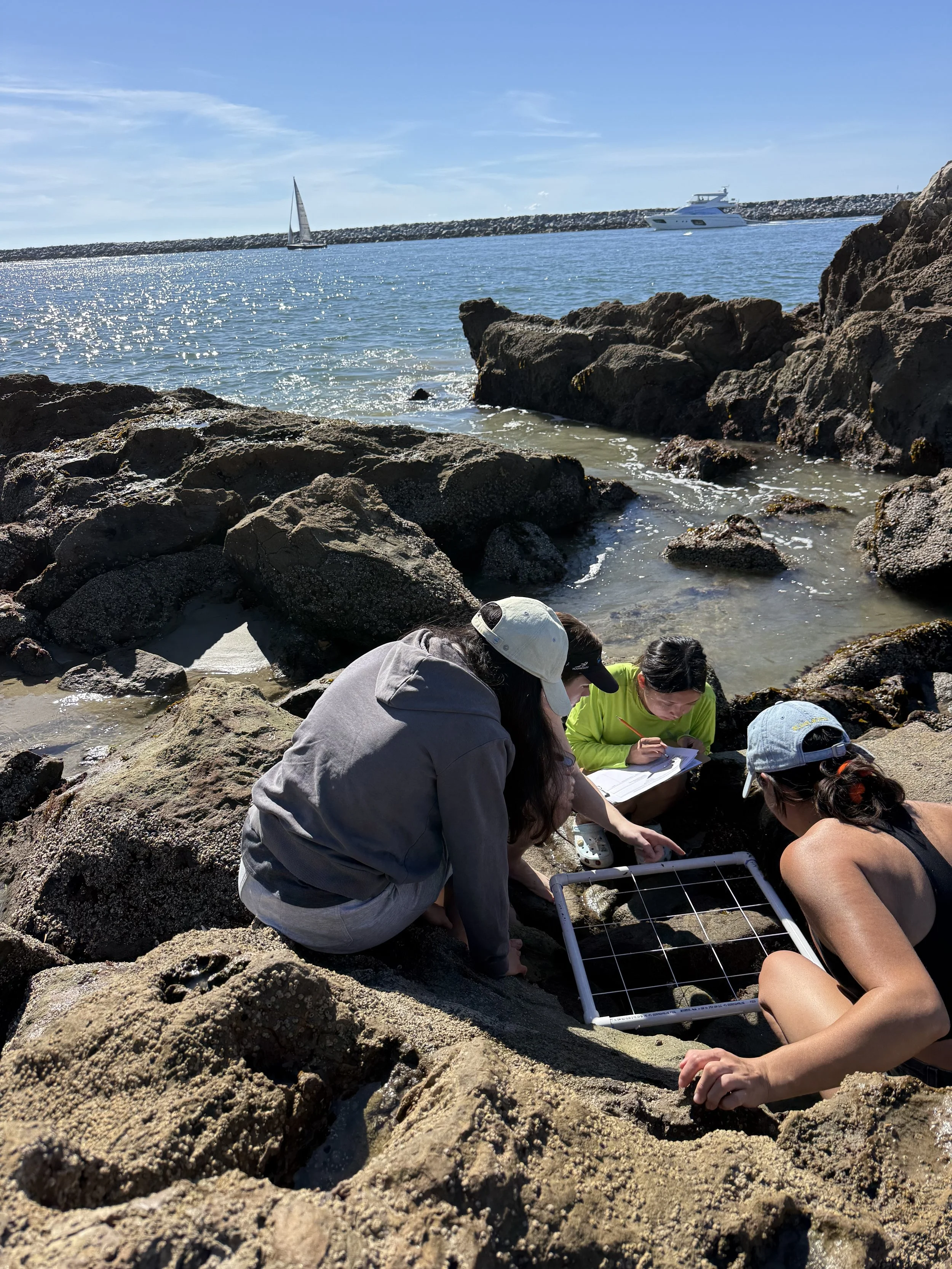
COVE began with a single TikTok post in which I asked for undergrad volunteers to help with my dissertation research, and the response was far larger than any one lab could accommodate. That surge of interest became COVE (Coastal Observations & Volunteer Ecology), a program run by the UCI chapter of SWMS that gives undergraduates drop-in access to real marine research. Each quarter, we plan to host two field days at Pirate’s Cove in Corona del Mar, where students complete a training on rocky intertidal tools and methods, and then survey the tide pools using quadrat methods adapted from MARINe and LiMPETS, uploading their photos to iNaturalist along the way. COVE field days are open to all UCI students, regardless of major or coursework completed, and the program has drawn in ~50 new members since its start this academic year. Here’s a quick recap of our first two field days.
Field Day 1: October 25
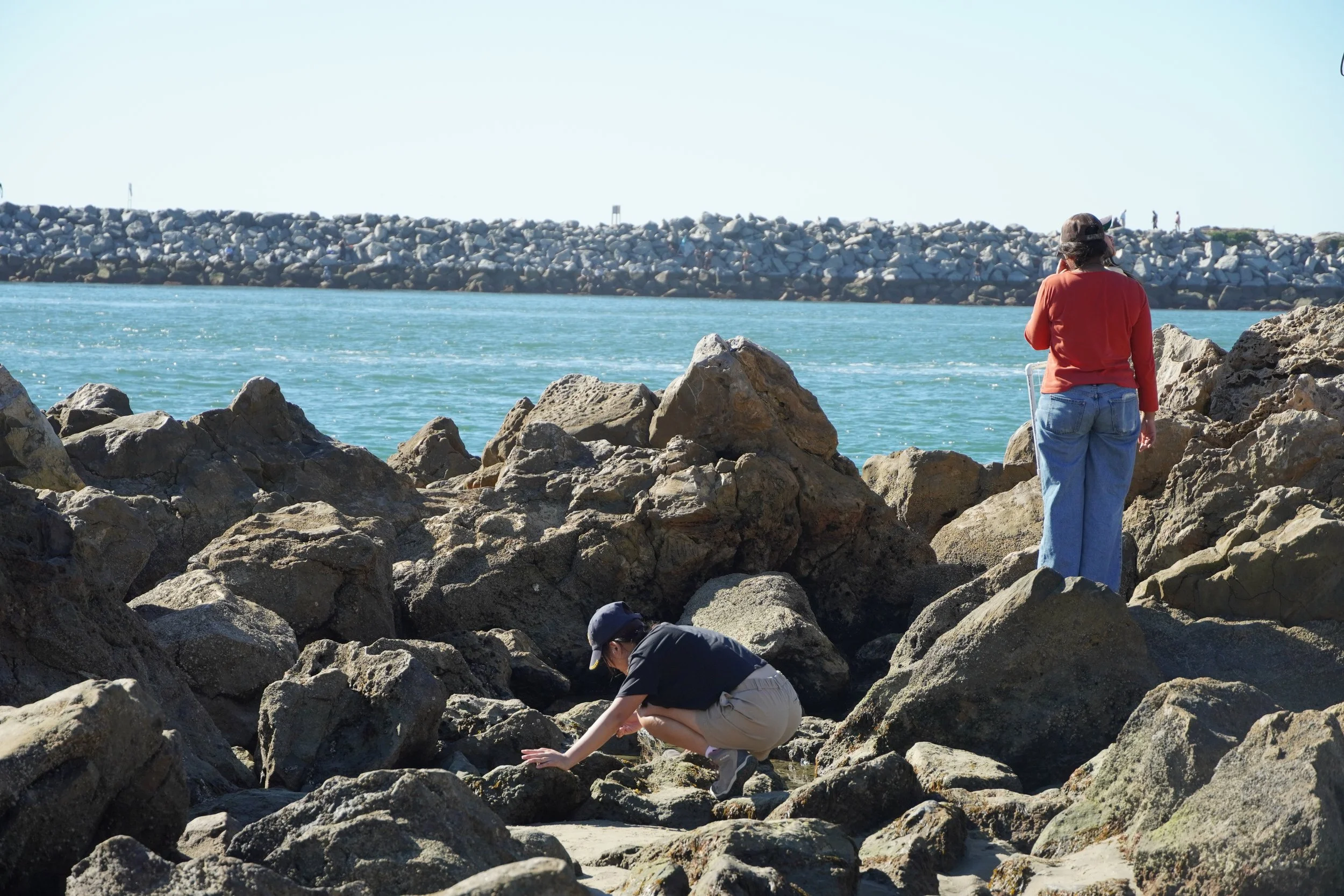
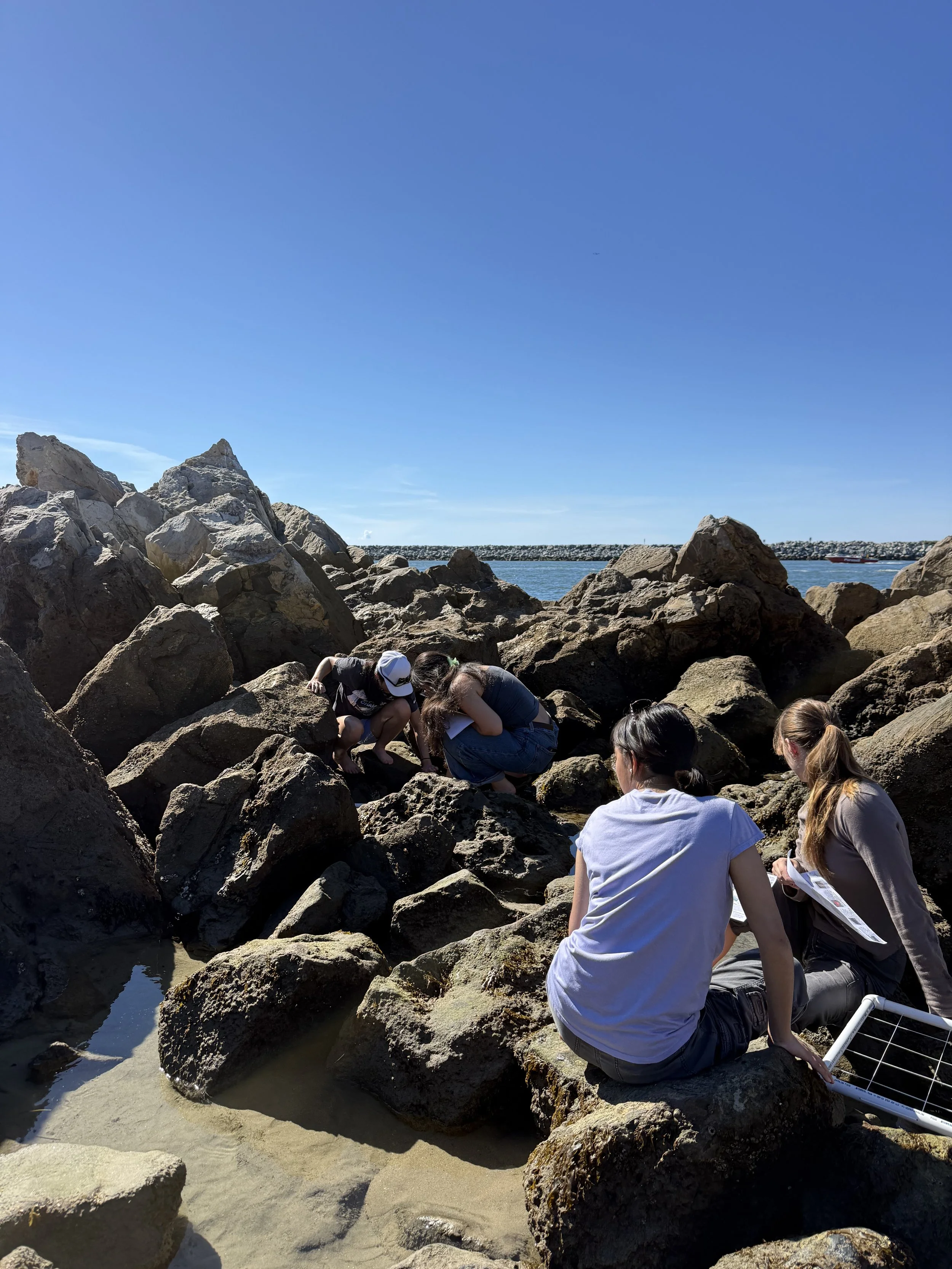
Fourteen students joined us for our first field day, most of them experiencing hands-on fieldwork for the very first time. Working in small teams, they placed quadrats, counted and identified the organisms inside them, and photographed what they found. Nine completed quadrats came back with data documenting at least 15 species. Our pre- and post-surveys showed that the experience made a real difference, with 11 of 13 matched participants reporting higher confidence in their research abilities afterward. The day was not without its challenges, since there was little to no cell signal at the beach for iNaturalist uploads, the rocks were slippery on the way in, and we needed to reschedule from our original date due to extreme high tides driven by an offshore storm.
Field Day 2: November 7
For our second field day, we made changes based on what we learned, introducing an updated identification guide tailored to our field site by mining iNaturalist for the top 20 most observed species there. Five students joined us, and the new guide seemed to help a great deal, because teams identified species that included nine we had not logged before, such as spiny chiton, owl limpet, sunburst anemone, and feather boa kelp. In total, our teams completed 13 quadrats and recorded 648 total counts of animals and algae across both days, a dataset built entirely by students who were new to this kind of work.
One moment everyone remembers
In our first session, an octopus surprised a participant by wrapping a tentacle around her ankle and then staying put beneath its rock while the group gathered around to observe it. For a student on her first field day, the encounter showed just how close real science can bring you to the animals you are studying, and it is a moment our participants are still talking about.
Why this program matters
COVE was designed for students who might not otherwise find a way into research. The data they collect will feed directly into projects they can opt into designing themselves and presenting at UCI’s Undergraduate Research Opportunities Program (UROP) Symposium, supported by on-campus research workshops throughout the year provided by our graduate student leaders. We are also evaluating whether a short field experience can build research confidence and a sense of belonging, and we plan to share those results after the program’s first year. If your chapter is considering something similar, we would love to share our protocols and what we have learned along the way, so please reach out anytime.
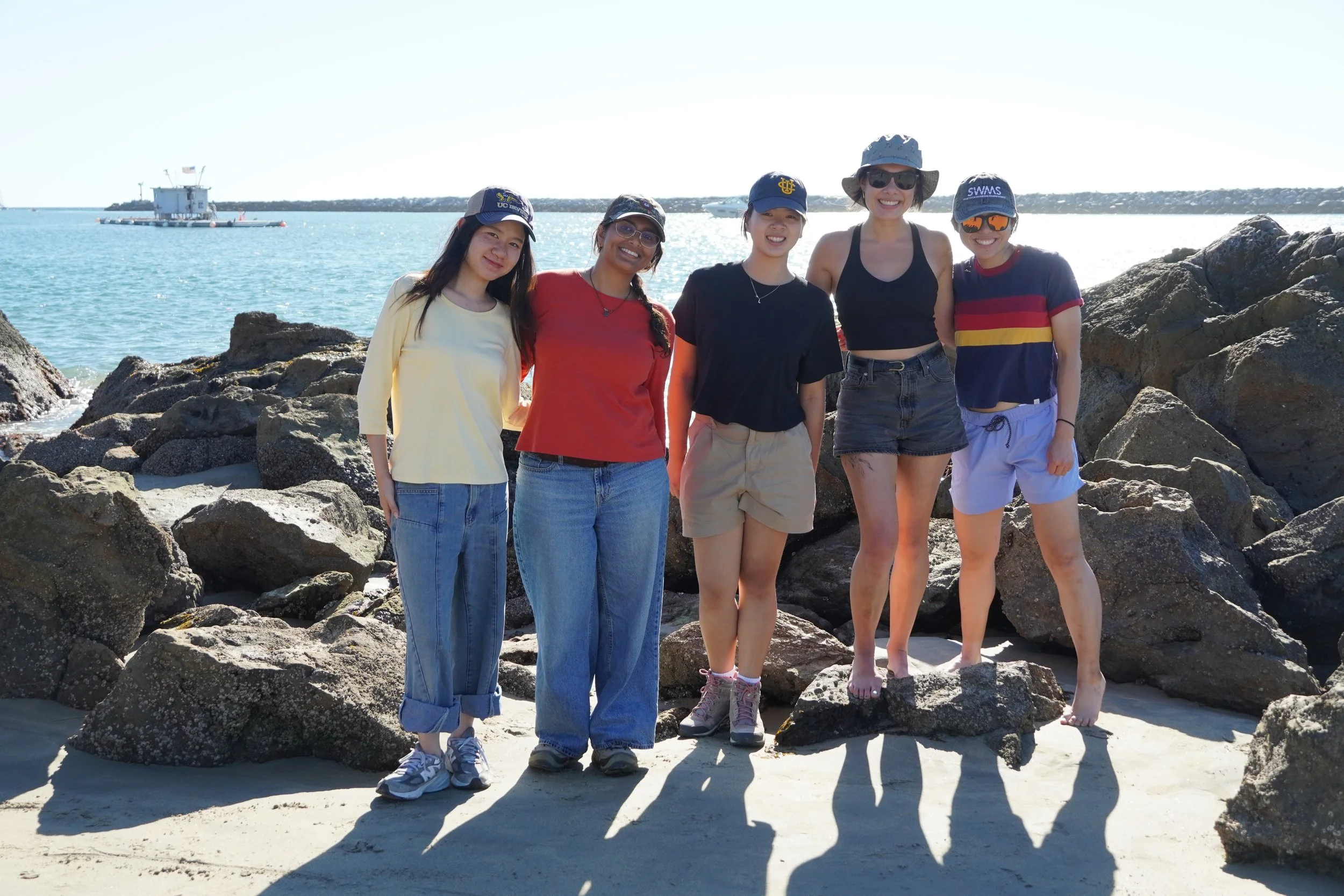
SWMS at UCI is co-led by Kaila Uyeda and Kim Willcott. COVE is supported by a Jane Goodall Institute Roots & Shoots mini-grant and the UC Irvine School of Physical Sciences. Thank you!